As the year came to a close in late December 2025, the Jain family traded the hustle and bustle for a fun, history-filled 4-day coastal road trip from Florida’s Atlantic shore to Georgia’s Lowcountry. What started as a fun trip through the First Coast and Georgia Lowcountry became one of awe and wonder. There was so much of Florida and Georgia that we had just not seen. It was 486 miles of roaring race tracks, historic St. Augustine, haunting driftwood beaches, centuries-old live oaks dripping with Spanish moss, and the elegant charm of Savannah.
I tracked every mile, photo, and highlight live on Polarsteps, and you can explore the full interactive map, day-by-day timeline, and all our pictures right here:
👉 View the full “Florida – Georgia Trip 2025” on Polarsteps
In this post, I’m sharing Day 1 of the trip: Daytona Beach, all the must-see stops along Florida’s First Coast, plus practical tips and hidden gems to help you plan your own Southeast road trip.
- Day 1: Daytona Beach, Florida
- Day 2: St. Augustine, Florida
- Day 3: Jekyll Island & St. Simons Island, Georgia
- Wormsloe & Savannah, Georgia
Day 1: Daytona Beach – Thunder, History & the Birth of Speed
The night before Day 1, we arrived in Jacksonville, Florida, which served as our perfect home base for the next two days. Its central location made it ideal for easy day trips to both Daytona Beach and St. Augustine.
From Jacksonville, the drive to Daytona Beach takes about 1.5 hours. You can take the faster route via I-95 or enjoy the scenic, ocean-hugging drive along Ocean Shore Boulevard (A1A). We opted for the quicker I-95 route on the way there and returned via the beautiful A1A coastal road.
While most visitors come to Daytona Beach for its legendary racing heritage, which includes the Daytona International Speedway, the Motorsports Hall of Fame of America, The Daytona hotel (Autograph Collection), and the historic Ormond Garage, history enthusiasts will discover another true hidden gem: The Casements.
The Daytona International Speedway is one of the most iconic motorsports venues in the world. It is home to the legendary Daytona 500 (NASCAR) and the Rolex 24 at Daytona (IMSA). What makes Daytona stand out from its peers is the banking (31-degrees in the turns, which has historically allowed for 200+ mph driving). Like Monaco for F1, it is every NASCAR driver’s dream to win the Daytona 500.
So it is no surprise that, for many automotive fans, traveling to Daytona is a must-do. If you are traveling on a non-race day, here are some experiences you can have there.
- Guided Track Tours – on a non-race day, you can book a tour (~60 mins) to ride in an open-air tram around the race track.
- The tour allows you to experience the venue like no other, from traveling the infield, to the pits and garage, to standing atop the Gatorade Victory Lane. The tram also lets you experience the 31-degree banking.
- Pro-tip: Book your tickets in advance, as the tickets will run out on the day of.
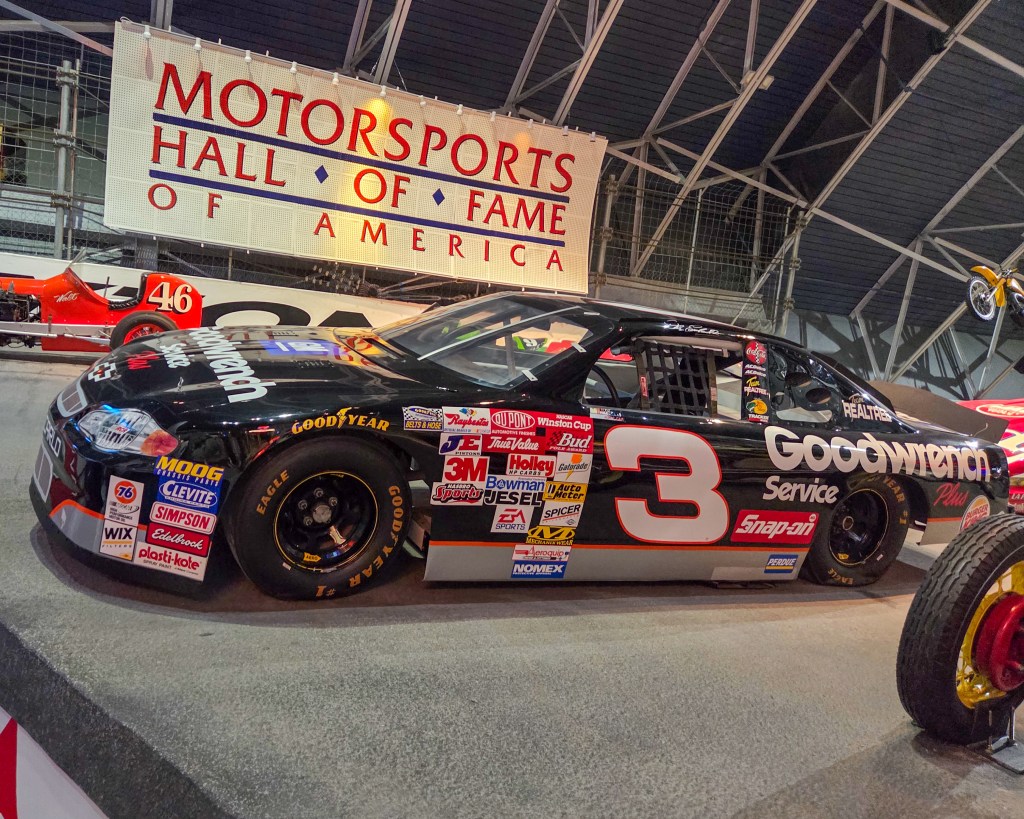
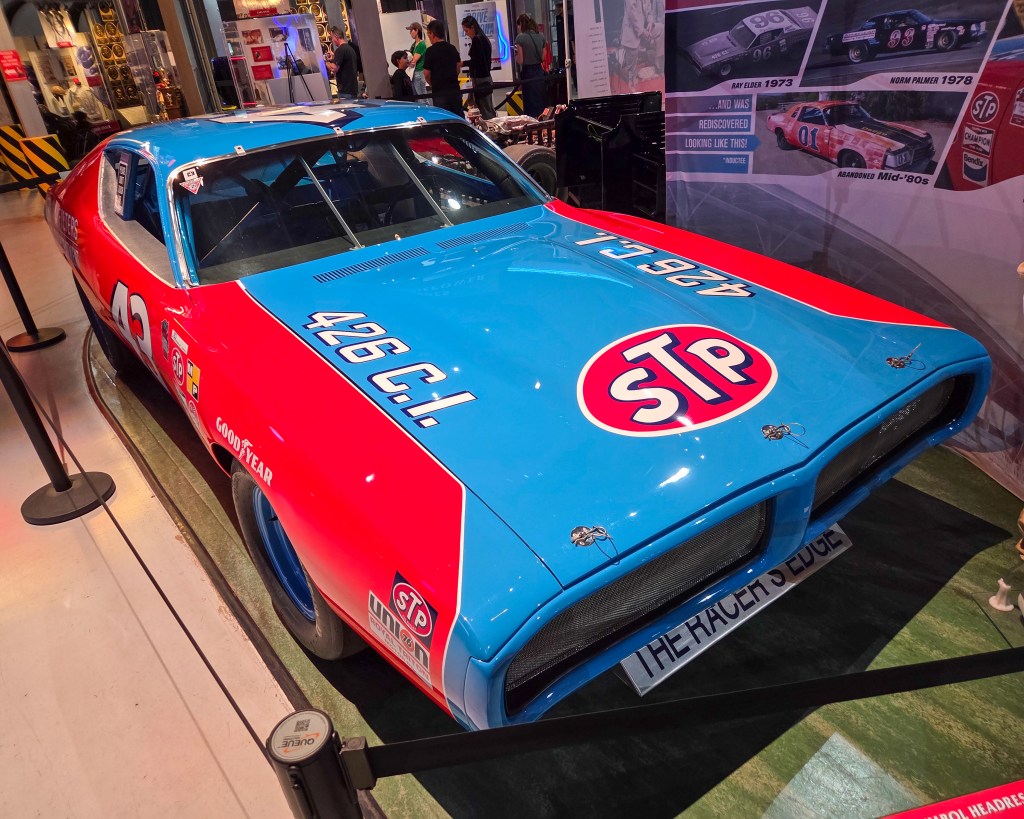
- Motorsports Hall of Fame of America – This 20,000 sq. ft. museum is included with every track tour and showcases some of America’s most legendary motorsports icons.
- The actual winner of the Daytona 500 is displayed in all its confetti-strewn glory, alongside footage of the race, in the theater next door.
- Iconic vehicles like Dale Earnhardt’s and Richard Petty’s stock cars, the fabulous Hudson Hornet, land speed record cars, motorcycles, powerboats, Indy Cars, and much more.
- Interactive exhibits, a theater with racing footage, and artifacts that bring the full history of speed to life.
- NASCAR Racing Experience – for the thrill-seeker, get behind the wheel of an actual NASCAR-styled racecar and drive timed laps around the speedway, or opt for a Ride Along with a pro driver.
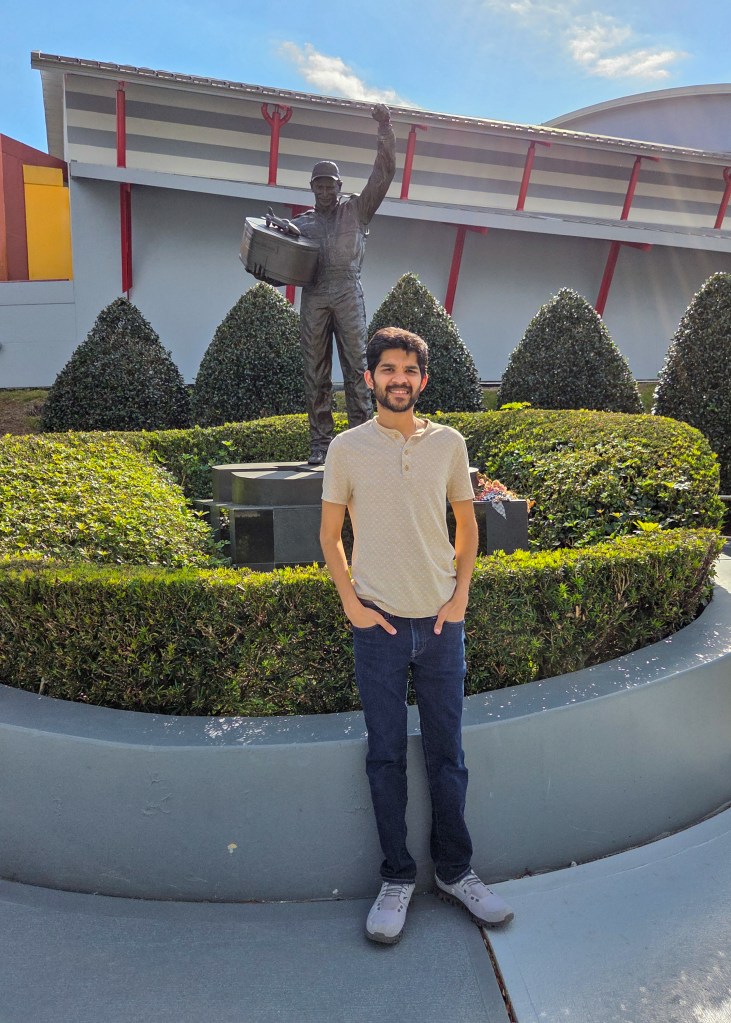
- Daytona 500 Champions’ Walk of Fame – Walk the Walk of Fame right outside the museum to see the champions of the past up close, and don’t forget to pay tribute to one of the best drivers in NASCAR, Dale Earnhardt, Sr.
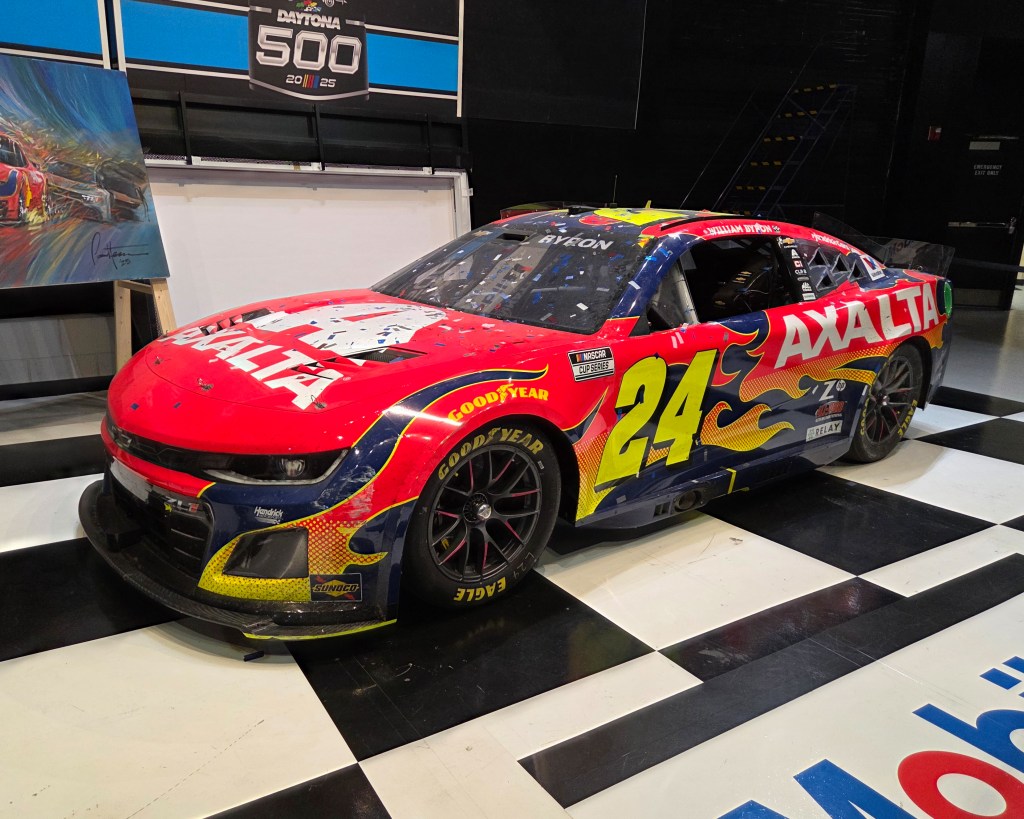
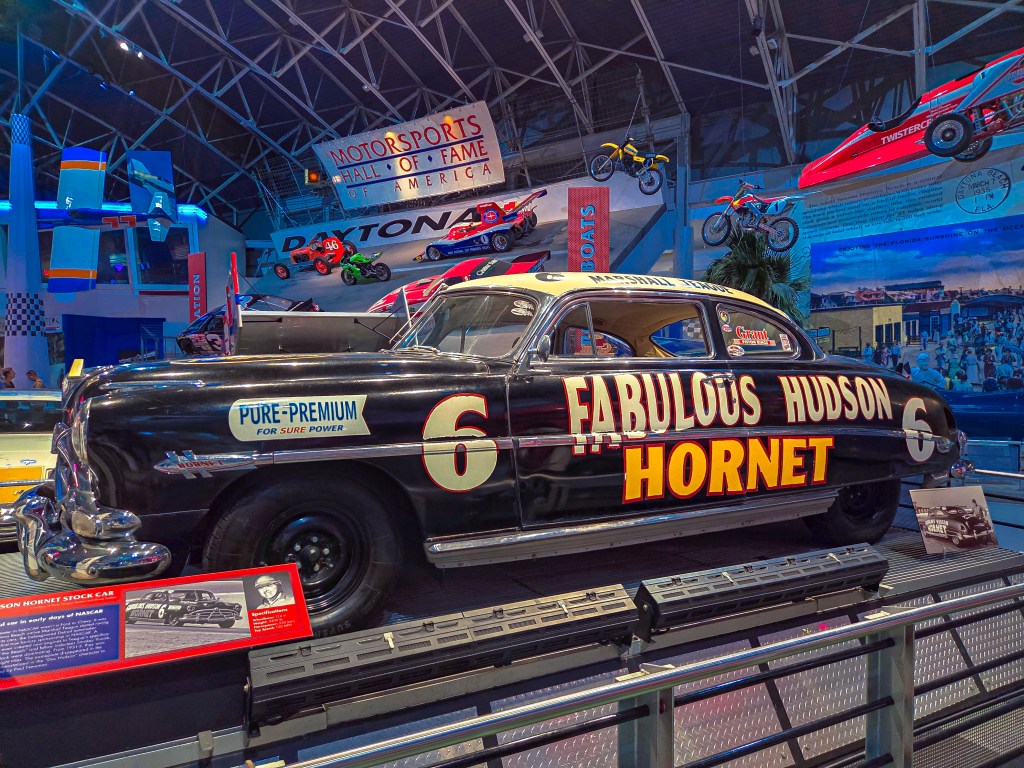
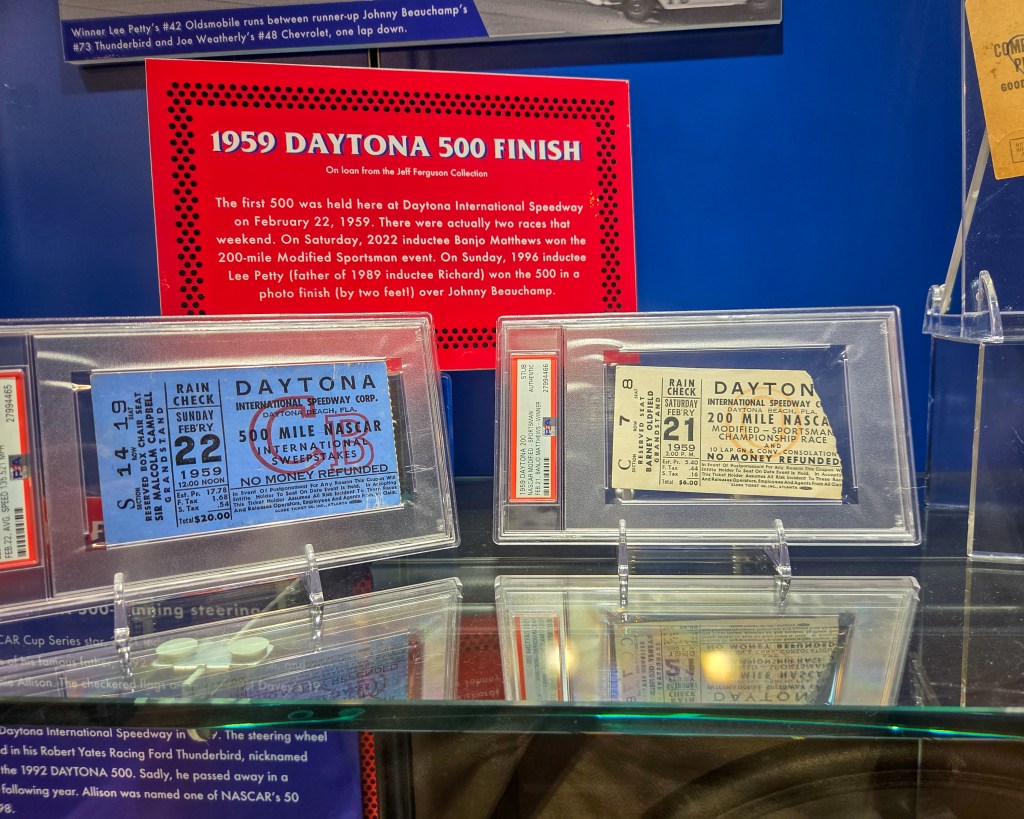
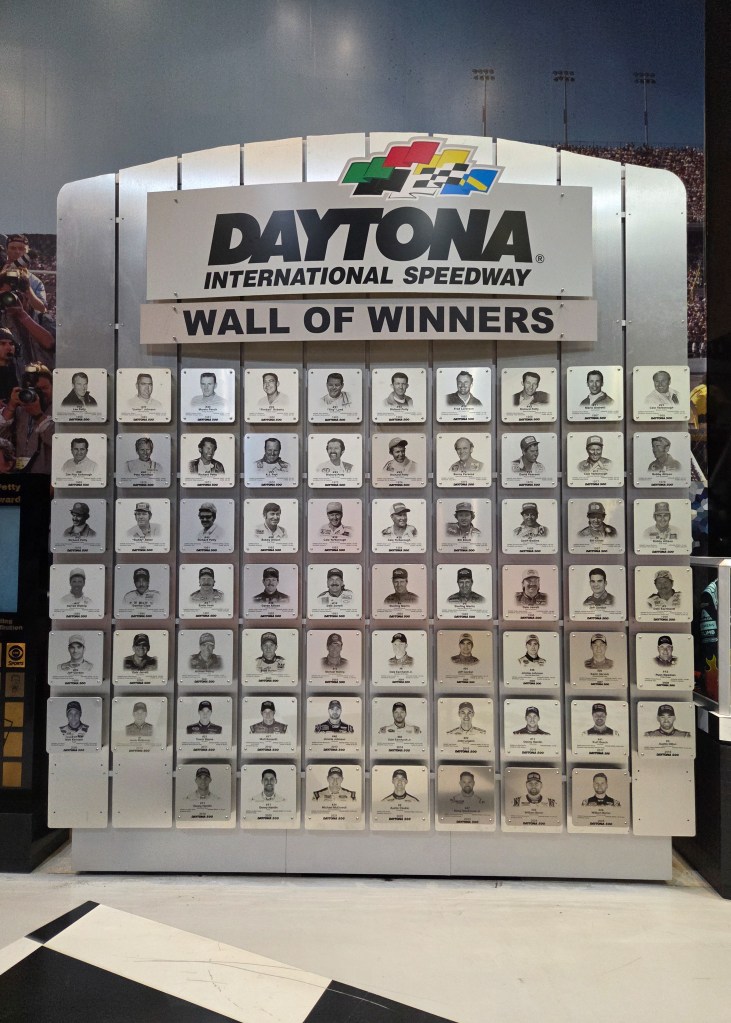
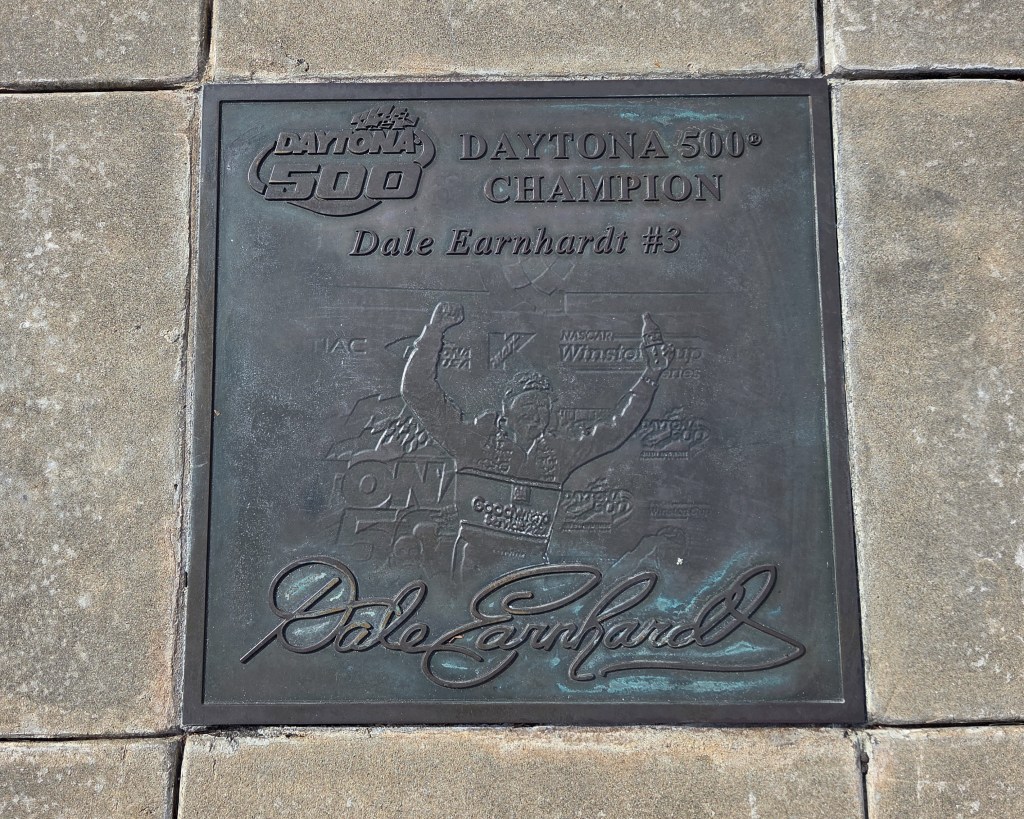
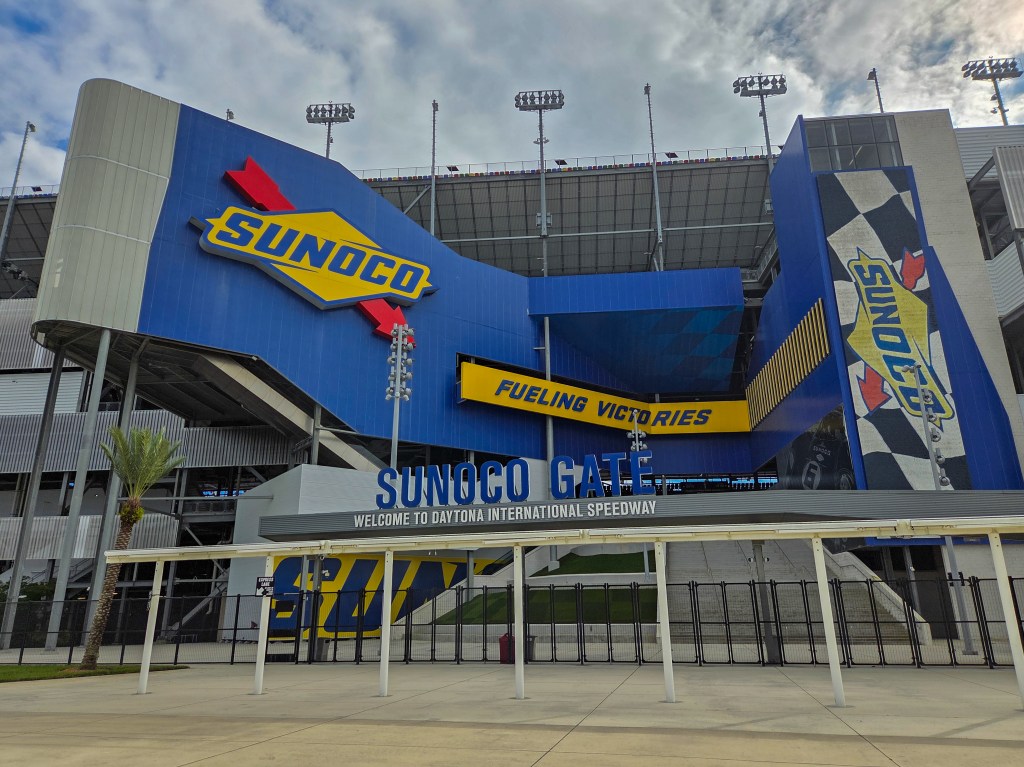
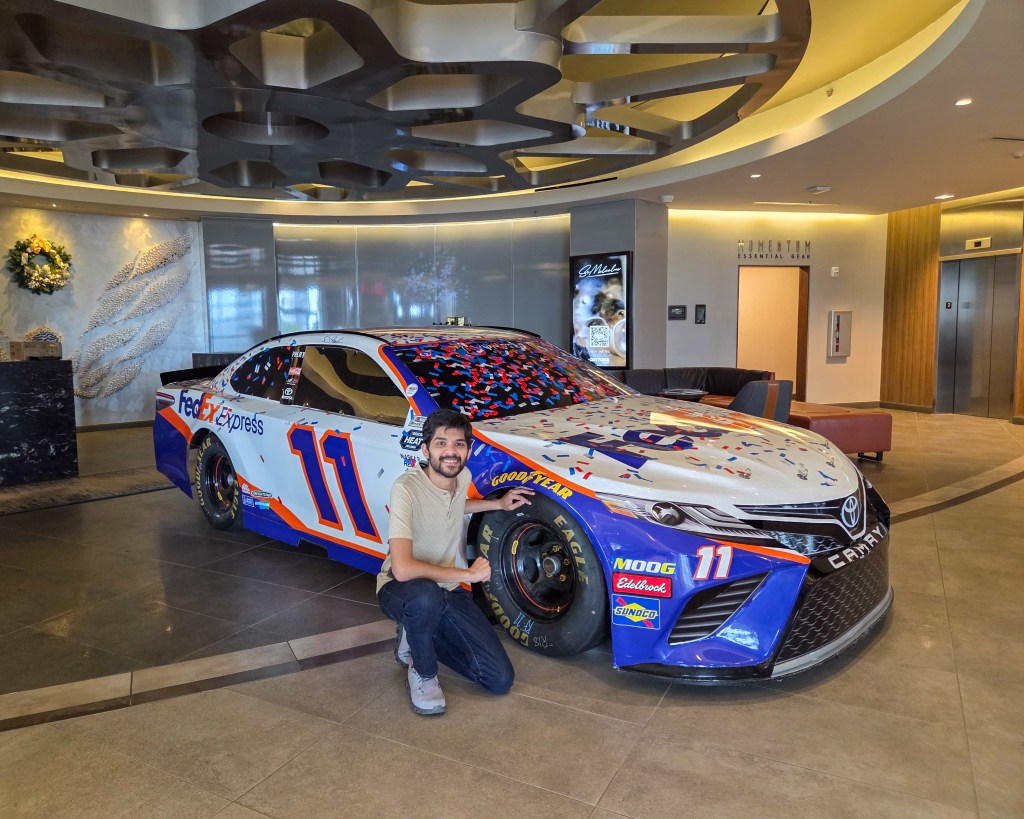
While exploring the area around the racetrack, I highly recommend staying at or visiting The Daytona, Autograph Collection. The lobby is an absolute treat for motorsports fans. It’s filled with impressive displays of historic race cars, including several vehicles that have raced or won at Daytona. One standout is Denny Hamlin’s winning NASCAR, proudly on display.
Lastly, cruising north along Ocean Drive Blvd (A1A) in Ormond Beach, you spot the ocean sparkling on your right and pull over at the small, breezy Birthplace of Speed Park where Granada Boulevard meets the sand.
You step out onto the grass and walk straight up to a charming green replica of the historic Ormond Garage, which is the original “Gasoline Alley” from 1904. Inside the open structure, you can get close to two gleaming replica race cars: the sleek Bullet #1 and the bold Pirate. Informational plaques and markers surround the garage, telling the story of those early 1900s speed trials when drivers pushed their machines along the hard-packed beach just yards away.
Feel the salt breeze on your face as you wander the park, snap photos with the Atlantic Ocean as your backdrop, and read about how this quiet stretch of sand once hosted the world’s first automobile speed records.
For history lovers, perched on the eastern bank of the Halifax River in Ormond Beach, just two blocks from the Atlantic Ocean, is The Casements. It is a charming 9,000-square-foot historic mansion known as the “Jewel of Ormond Beach.” Built in 1913 as a winter home for a clergyman, the Shingle-style residence earned its name from its large hand-cut casement windows. In 1918, it became the winter retreat of oil magnate John D. Rockefeller, who lived there each season until he died in 1937 at age 97. Unfortunately, during our visit, The Casements was closed for the holiday season.
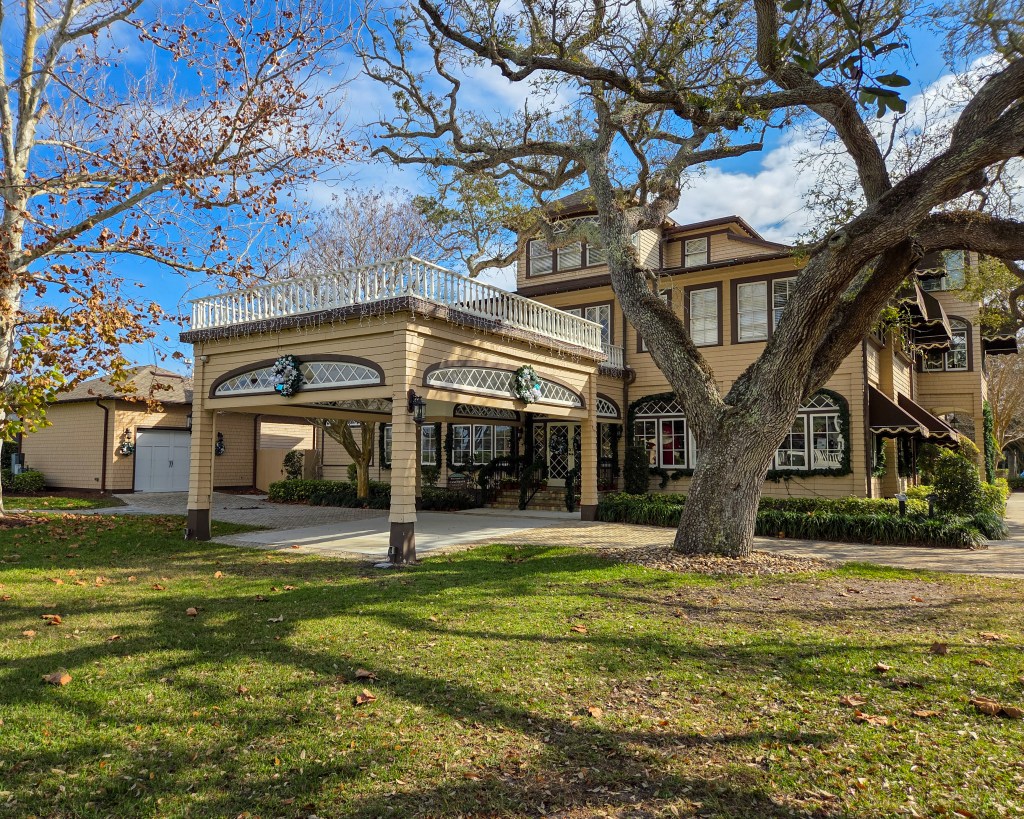
Today, it serves as the city’s beloved Cultural Center, offering tours, special exhibits, a gift shop, and event rentals, while its scenic riverfront grounds invite visitors to stroll and soak in a piece of Gilded Age and early Florida history.
As you cruise south along A1A, the road hugs one stunning beach after another, with the Atlantic sparkling on your right. The drive gradually delivers you to St. Augustine, the next highlight of our journey, and the oldest continuously inhabited European-established city in the United States.
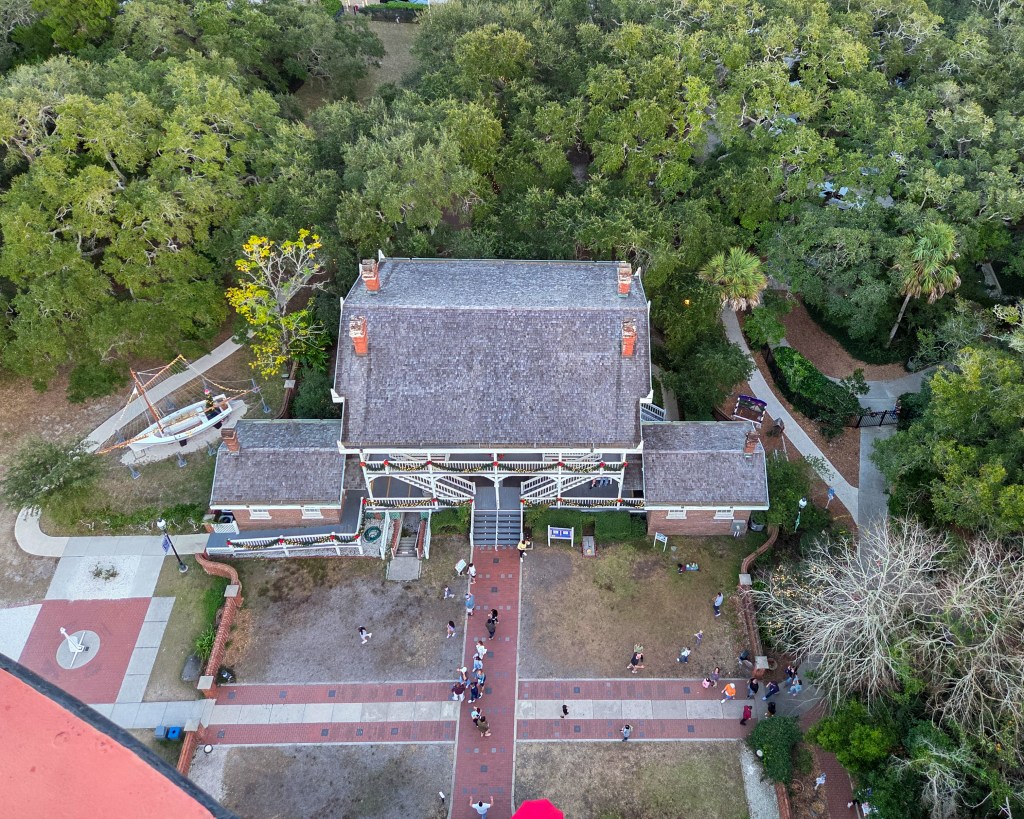
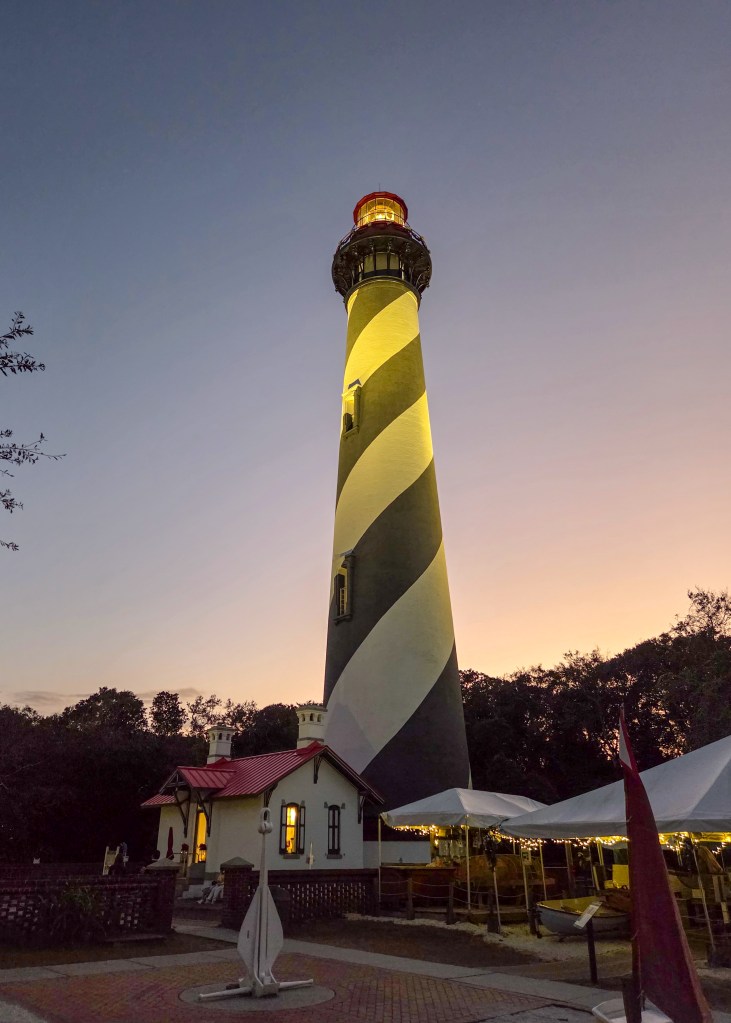
Located on Anastasia Island, the iconic St. Augustine Lighthouse rises dramatically with its bold black-and-white spiral stripes. Climbing its 219 iron steps is a thrilling workout; however, it’s so worth it.
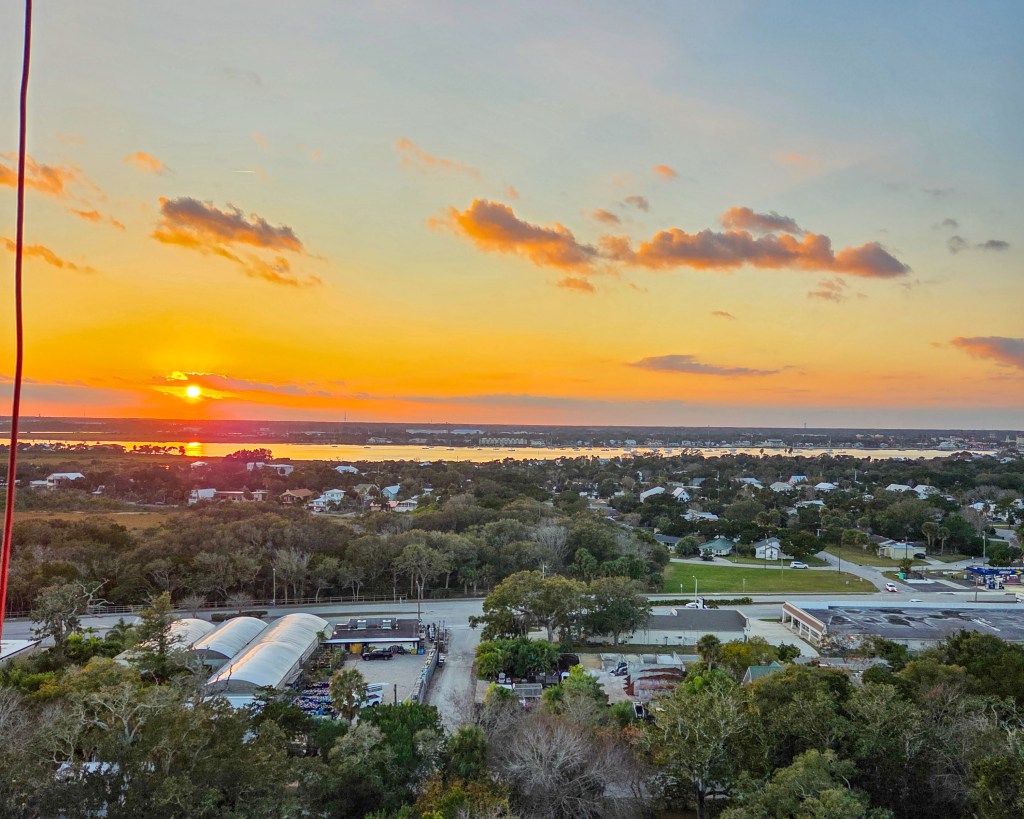
Stepping out onto the observation deck at 165 feet, you’re rewarded with a breathtaking 360-degree panorama: the vast Atlantic Ocean to the east, the red-tiled rooftops and historic spires of St. Augustine below, the serene Matanzas River, and the elegant Bridge of Lions arching gracefully in the distance.
By day, the views stretch for miles across the coastal landscape. At sunset, golden and pink hues bathe the city, water, and islands in a magical glow — the perfect way to close out an unforgettable Day 1.
Up Next: Stepping Back in Time in St. Augustine
From the roaring engines of Daytona, we’re heading 50 miles north to a city that feels frozen in time. Next, we trade the asphalt for cobblestones as we explore the “Ancient City.”


Leave a Reply